
Design

Our design is our proud point of difference as it is influenced by over 40 years of operational expertise. We capitalise on efficiencies both from a human resources perspective and from an environmental perspective, whilst always prioritising resident comfort and safety as the core focus of our designs.

A selection of twin bedrooms are provided for couples, or adjoining single bedrooms. Site areas range from 16000m2 to 20000m2 for a 144 bed facility, our Gross Floor Area is generally 62-64m2 per approved bed, so in vicinity of 9000-9500m2 net floor area, and we normally occupy between 50 to 60% of the available site with the balance of the site being used for carpark spaces, garden areas, playground, entertainment and other recreational activities for the benefit of residents and visitors

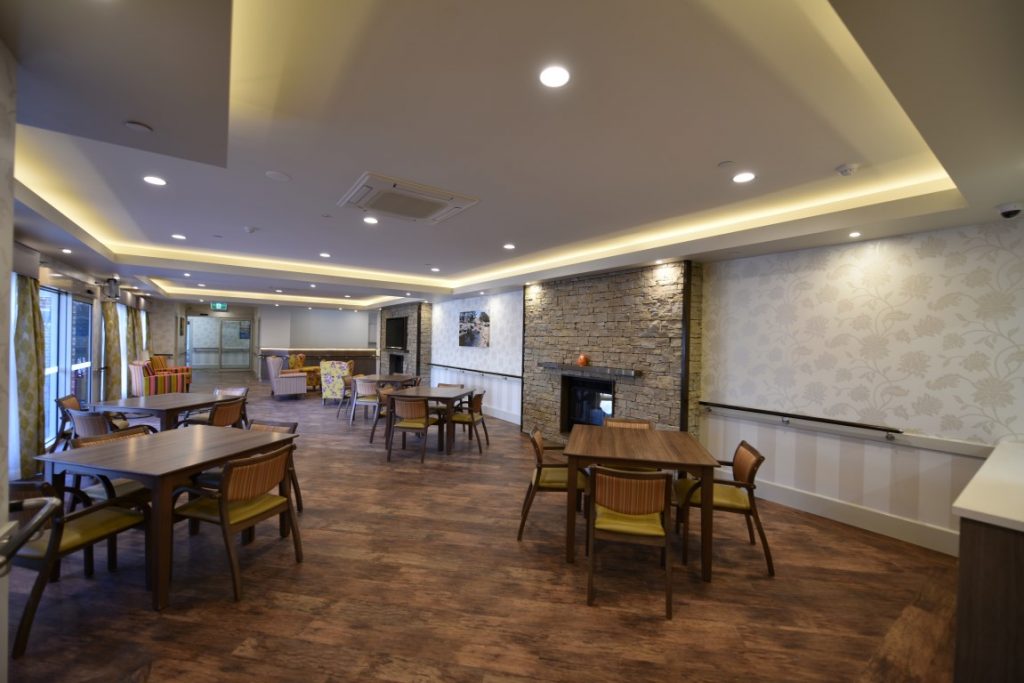
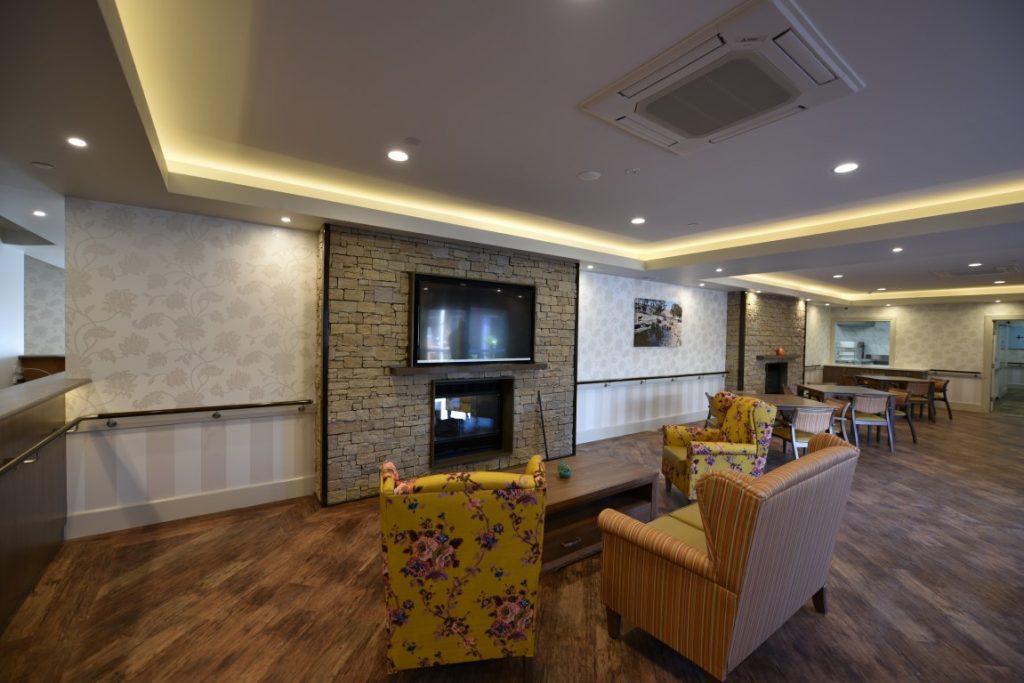
Designing a dementia wing requires a careful balance between safety, comfort, sensory wellbeing, and a sense of familiarity. Our approach is based on a 36-resident model, thoughtfully divided into two smaller wings of 18 residents each. This scale helps create a more intimate, home-like environment, reducing overstimulation and supporting better orientation for residents.
Each wing functions as a self-contained household with clear sightlines, simple circulation, and easy access to shared living, dining, and outdoor areas. Natural light, calming colours, acoustic control, discreet safety features, wayfinding cues, and safe
wandering paths are all integrated to promote independence while minimising confusion and distress.
A retro-style kitchen is also incorporated within the shared living environment, designed to evoke familiarity through recognisable finishes, appliances, and domestic cues from residents’ earlier years. These spaces encourage reminiscence, stimulate memory and conversation, and provide opportunities for meaningful daily engagement through familiar household activities and sensory experiences such as cooking aromas and visual cues.
Dedicated nursery spaces support doll therapy in calm, nurturing settings that encourage emotional connection, comfort, and meaningful engagement. Acoustic sensory art panels are also incorporated throughout the environment, combining sound absorption with tactile and visual stimulation to create quieter, more calming spaces.
Ultimately, the goal is to create a supportive environment that enhances quality of life—one that feels familiar, dignified, engaging, and reassuring for residents, while also enabling staff to provide efficient and compassionate care.
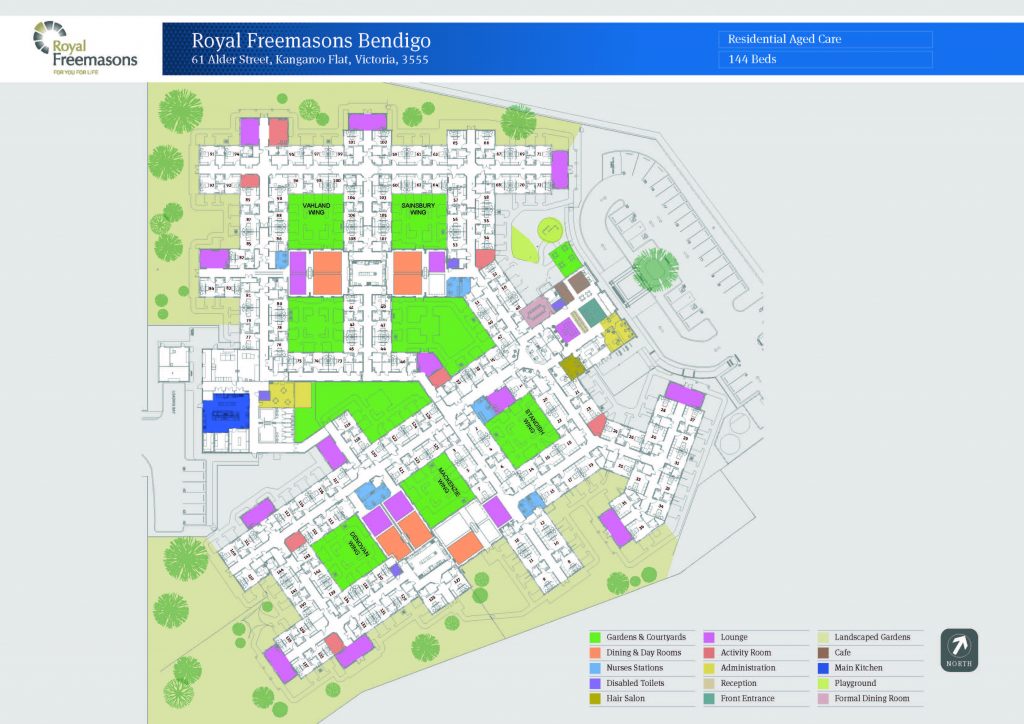
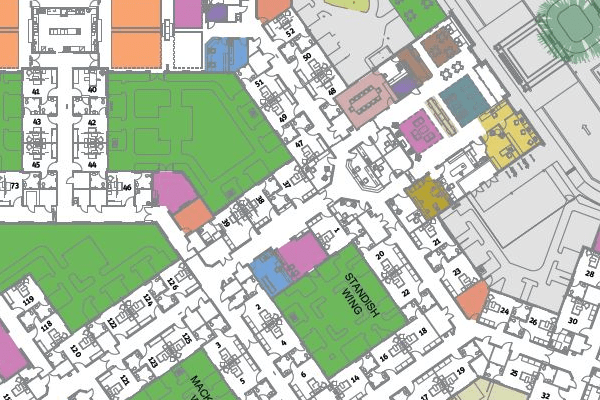
Residential aged care floor plans play a critical role in shaping safe, comfortable, and engaging living environments for residents while supporting efficient care delivery. Thoughtfully designed layouts prioritise accessibility, mobility, and dignity, enabling residents to navigate spaces with ease while maintaining independence.
Each residential wing is carefully planned around a centrally located, secure nurses’ station that provides clear supervision over adjoining lounge and dining areas. This arrangement reflects the natural rhythms of daily life—residents are instinctively drawn to areas with activity, social interaction, and the sensory cues associated with food preparation and mealtimes. By positioning care staff at the heart of these shared spaces, the design promotes both safety and meaningful engagement.
These central hubs also serve as welcoming environments for families and visitors, offering comfortable, informal settings where they can spend time with loved ones and interact easily with staff. This visibility and accessibility foster stronger relationships, improved communication, and a greater sense of community within each wing.
Floor plans balance private and communal spaces, typically including well-appointed bedrooms with ensuites, generous living and dining areas, quiet retreat spaces, and secure outdoor zones. Design elements such as natural light, intuitive wayfinding, and clear sightlines are incorporated to support residents living with cognitive impairments, including dementia. Operational efficiency is seamlessly integrated through discreet back-of-house planning, ensuring staff can deliver care effectively without disrupting the residential atmosphere. Flexibility is also built into the design, allowing spaces to adapt to changing care needs over time.
Ultimately, well-considered floor plans create environments that are not only functional and safe, but also warm, social, and genuinely homelike—enhancing quality of life for residents, their families, and the staff who support them.

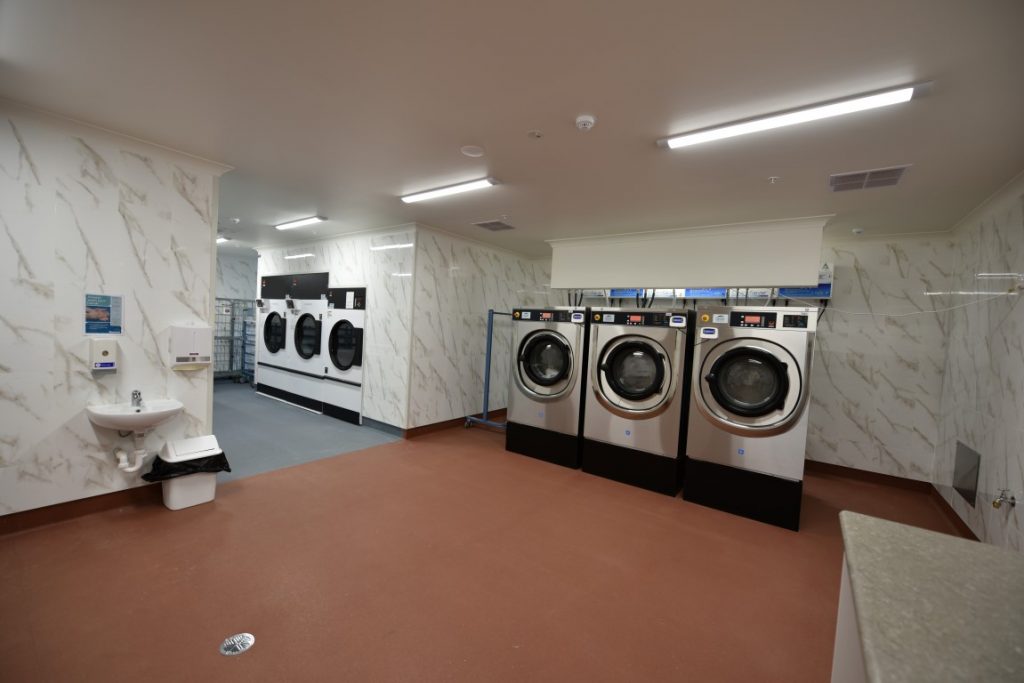
A thoughtfully designed laundry is central to maintaining the highest standards of hygiene, comfort, and dignity in residential aged care. Our in-house laundry service is equipped with premium IPSO washing machines and dryers, enhanced by advanced ozone-controlled washing cycles that deliver superior cleaning and disinfection while remaining gentle on fabrics.

The layout of the laundry has been carefully planned around best-practice infection control principles. Dedicated “dirty” and “clean” zones are physically separated, with controlled access points ensuring a one-way workflow: all items enter through the dirty area and exit only through the clean area. This deliberate flow minimises the risk of cross-contamination and supports a consistently safe environment for residents and staff.

Climate control within the laundry further enhances operational efficiency and hygiene, maintaining optimal conditions for both equipment performance and linen handling. Every aspect of the design—from spatial planning to daily procedures—reflects a strong commitment to infection prevention, safety, and quality care.

This integrated approach ensures that residents’ personal items and linens are treated with the utmost care, delivering not just cleanliness, but peace of mind.

Our approach to kitchen design in residential aged care is grounded in both operational excellence and the lived experience of residents and their families. We create highly efficient central production kitchens that prepare fresh, hot meals, which are then distributed to satellite kitchens servicing multiple dining areas throughout the facility. This model ensures consistency in quality while allowing each dining space to feel intimate, welcoming, and connected to daily life.

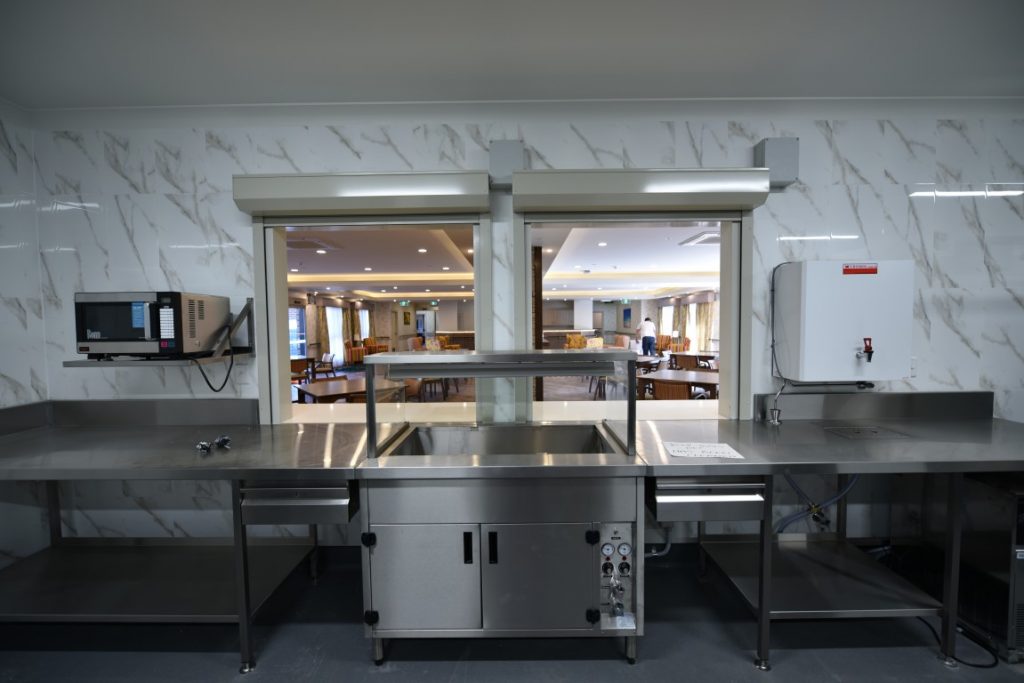
A key principle of our design is supporting resident choice and dignity. Dining areas and serveries are carefully planned to enable residents to select meals in a way that feels natural and engaging, while maintaining appropriate separation from back-ofhouse preparation zones. This balance enhances the dining experience without compromising safety or operational efficiency.

Our layouts place strong emphasis on hygiene and flow. Only clean, sanitised crockery, cutlery, plates, and utensils are presented at the servery, ensuring a safe and appealing environment for meal service. After dining, used items are discreetly cleared, stacked onto dedicated trolleys, and returned directly to designated dishwashing areas within the main kitchen. This clear separation of clean and soiled processes minimises cross-contamination risks and supports best-practice infection control.

Beyond functionality, we design with empathy—recognising that food is central to comfort, routine, and social connection. Our kitchens and dining spaces are therefore not just efficient systems, but integral parts of a home-like environment where residents can enjoy meals with dignity, choice, and confidence.